
Make your AI understand your business.
Architecture advisory and focused discovery to connect business knowledge with your systems and AI.
Your AI needs to know what information means in your business, which sources to rely on, and who has authority to decide. That knowledge often sits across people, documents and systems.
Arqua helps bring it together and structure it so your teams, systems and AI can work from a shared understanding.
Start with one real situation
Bring an important business decision, operational workflow or AI use case. Together, we’ll clarify the problem, assess what you already have and identify a practical way forward.
Tell us about your situation → Briefly describe your situation and the outcome you are seeking. Include your email if you would like a response. Submission does not establish an engagement.
Explore the foundations: Architecture · Enterprise Intelligence
More information is not enough
A representation is not reality. Retaining information does not make it suitable for every decision. An earlier approval does not automatically establish whether a later action may proceed.
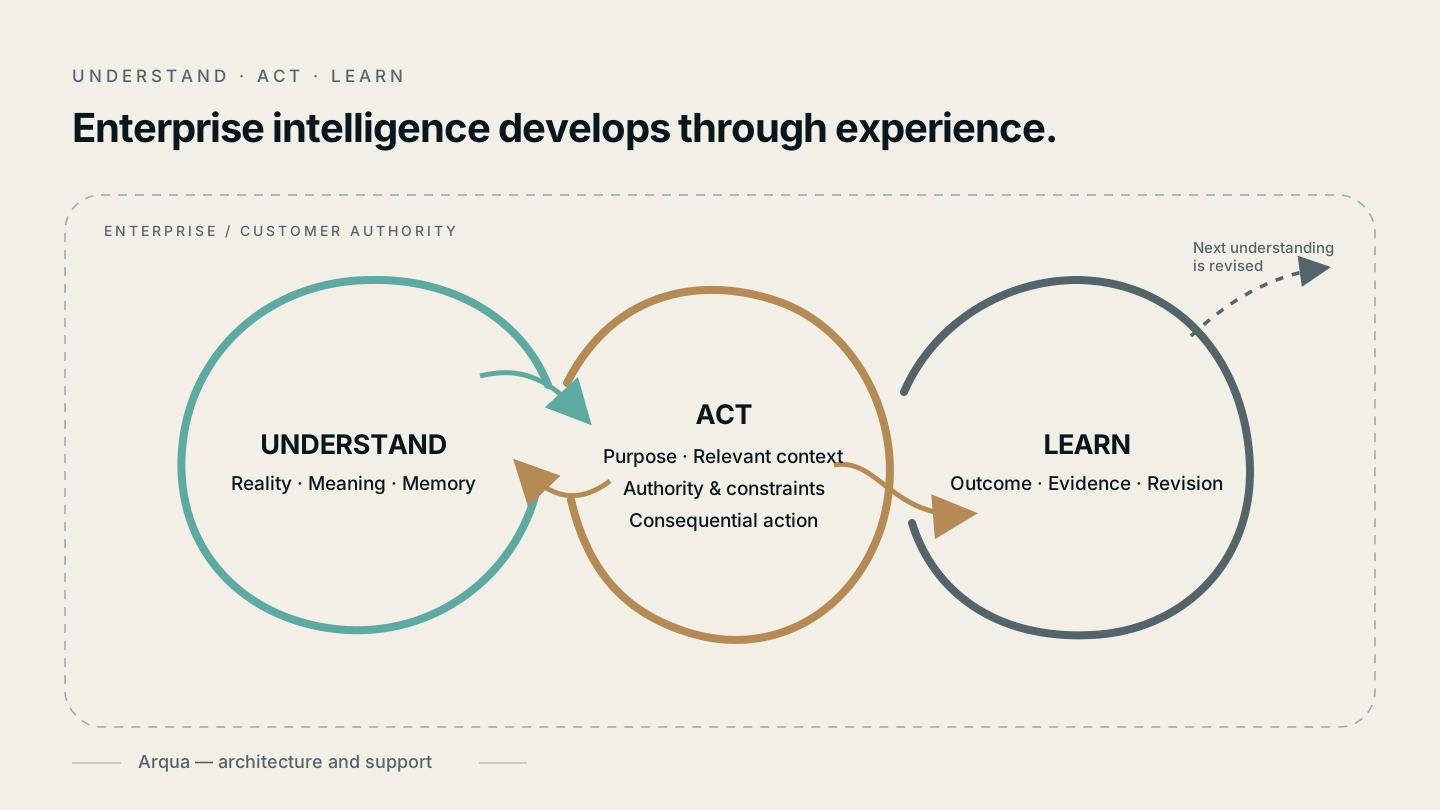
Enterprise Intelligence Architecture makes the responsibilities between understanding, reliance, action and learning explicit.
Illustrative example — completed work, unresolved service
A work order is marked complete, but the customer’s service remains unavailable. The question: Which record supports which conclusion, and what evidence is needed before declaring restoration? The architectural response: Enterprise Intelligence Architecture makes the meanings, evidence requirements and decision responsibilities explicit, whether people, applications or AI participate. The observed service outcome then informs review and any governed revision. Illustrative scenario; not a reported client result.
Architecture gives representation its purpose
Start with the operational purpose and the architecture of the system: its responsibilities, boundaries, relationships and intended outcomes. This establishes what must be represented and what understanding is needed before choosing platforms, graphs or AI tools.
An architecture semantic model makes those concepts and relationships explicit. Profiles select and specialise the applicable architecture for a domain, technology or purpose. Enterprise Representation Intelligence connects evidence to those representations, identifies differences and supports governed revision.
Architecture records describe intended or accepted arrangements. Operational evidence describes what exists and happens. Keeping both visible allows the enterprise to identify gaps rather than mistake a model for reality.
Understanding Arqua
Architecture · Representation · Qualification · Understanding · Action
These five questions offer a way to remember Arqua’s focus:
- Architecture: What responsibilities and boundaries must exist?
- Representation: What are we describing, and what evidence supports it?
- Qualification: Is the assembled context sufficient for this purpose?
- Understanding: What can we reasonably conclude and rely upon?
- Action: What may proceed under current authority and conditions?
Meaning, institutional memory and evidence connect these questions. Outcomes inform governed learning and revision.
Understanding can inform action. It does not authorise it.
The mnemonic explains Enterprise Intelligence Architecture; it is not a fixed sequence or five new architectural layers.
Explore Arqua
Enterprise Intelligence
Understand the institutional capability, the problem it addresses and why information, analytics or AI alone do not define it.
Architecture
Explore the integrated capstone, canonical definitions and current references that explain the architectural responsibilities and their relationships, including deeper implementation patterns and technology participation.
Applications
See how the established architecture applies to operational situations and sector illustrations, without creating a different canonical architecture for each sector.
Research
Read Arqua publications and Codex Resonance research, with each source’s original questions, claims and publication standing preserved.
Work with Arqua
Explore current ways to engage Arqua and discuss an appropriate starting point for your organisation.
Ask the Arqua Guide
Explore the approved public material through questions and examples. Follow the original sources for their definitions, architectural detail and publication standing.
Start with an operational priority
Begin with the outcome you are trying to achieve and one consequential action, decision or commitment where understanding, authority or outcomes need to be clearer.
Boundary
This site describes architectural concepts, diagnostics, and advisory boundaries.
It does not assert legal compliance, regulatory certification, assurance, system operation, or implementation.
Accountability for decisions and execution remains with the organisation.
Explore the full architecture
The public architecture, implementation patterns, applications, research and engagement material are organised through the five gateways above. For canonical definitions, architecture references and deeper implementation patterns, begin with Architecture.
ArchitectureAbout Arqua© 2025–Present Arqua Pty Ltd. All rights reserved. Public material is explanatory and does not confer implementation or commercialisation rights. See Website Terms of Use for applicable conditions.
Authority Pattern LibraryRequest a BriefingWebsite Terms of UseAuthority Pressure TestPre-Execution Pressure TestArchitecture AdvisoryExecution Admissibility AssurancePartner CapabilityArtificial Intelligence and Execution ControlAI-Ready Enterprise Semantics Reference ArchitectureExecution Admissibility Architecture — Canonical DefinitionsEnterprise Insertion PatternsEnterprise BridgesArchitecture PapersEnterprise Intelligence Architecture — Canonical DefinitionsThe Constitutional Architecture of Enterprise IntelligenceEnterprise Intelligence AssessmentEnterprise Representation IntelligenceEnterprise CoherenceConstitutional Runtime ServicesEnterprise Intelligence FrameworkContext Assembly LibraryEnterprise Coherence is Arqua’s architectural lens for examining how understanding, authority, action and learning remain aligned as conditions change.
Every Arqua capability exists to preserve coherent institutional understanding despite continuous operational change.
Institutional Intelligence for the Age of AIHuman Approval Is Not Necessarily Accountable ControlFrom Representation to Consequential ActionInstitutional MemoryEnterprise IntelligenceApplicationsResearchWork with ArquaImplementation